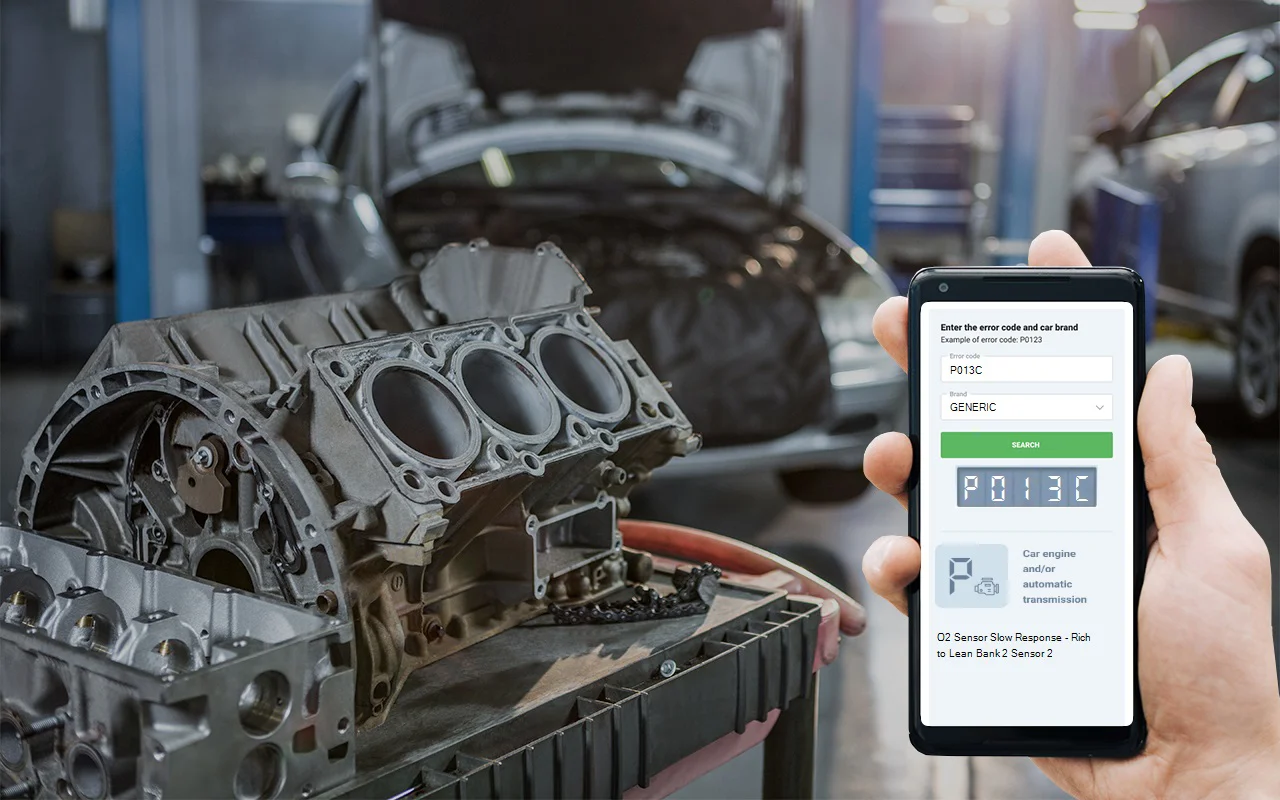
Let me break down what code P013C means for your vehicle. This code stands for “O2 Sensor Slow Response - Rich to Lean (Bank 2 Sensor 2).” In plain English, your car’s computer (the PCM) is watching the oxygen sensor that sits after the catalytic converter on the side of the engine opposite cylinder #1. This sensor’s job is to check how well the catalytic converter is working by measuring the oxygen left in the exhaust. Normally, the sensor’s voltage should switch back and forth as the engine runs richer or leaner. If the sensor is slow to react-especially when going from rich (more fuel, less oxygen) to lean (less fuel, more oxygen)-the computer throws this code. It’s basically saying, “Hey, I can’t trust this sensor’s info anymore.” This can affect how your engine runs and how efficiently it burns fuel, so it’s not something to ignore.
DTC P013C
 5588
5588 6 minutes of reading
Main Causes of obd code P013C
From what I see most often in the shop, there are a handful of usual suspects behind a P013C code. Here’s what tends to trigger it:
- Oxygen sensor failure - The sensor itself can just wear out or get contaminated over time.
- Exhaust leak - Even a small leak near the sensor can throw off its readings.
- Wiring or connector issues - Damaged wires or loose connections can mess with the sensor’s signal.
- Engine running too rich or too lean - If the engine isn’t burning fuel properly, it can confuse the sensor.
- Faulty catalytic converter - If the converter isn’t working right, the sensor will pick up on it.
- Defective PCM - Rare, but sometimes the car’s computer is the culprit.
In my experience, the sensor itself or an exhaust leak are the most common causes, but I always check the wiring and look for signs of engine running issues too.
Symptoms Associated with obd2 code P013C
If you’re driving around with a P013C code, here’s what you’ll probably notice:
- The check engine light will be on-usually the first sign.
- You might see your fuel economy drop. The car could be burning more gas than usual.
- Engine performance can feel off-maybe a bit sluggish or not as responsive as normal.
- Sometimes, you’ll notice other codes popping up too, especially if the problem is affecting more than just the sensor.
It’s easy to brush off a check engine light, but these symptoms can sneak up on you and get worse over time.

Diagnosis and Testing for P013C trouble code
Here’s how I tackle a P013C code step by step. I always start simple and work my way up:
- First, I use a scan tool to confirm the code and check for any related codes. Sometimes, there’s a bigger picture.
- I visually inspect the wiring and connectors at the downstream O2 sensor (Bank 2, Sensor 2). Look for frayed wires, corrosion, or loose plugs. Don’t forget to check the harness routing-sometimes it rubs against hot exhaust parts.
- Next, I check for exhaust leaks around the sensor and before the catalytic converter. Even a tiny leak can throw things off. It’s easier with a helper to rev the engine while you listen or feel for leaks.
- Then, I use the scan tool to watch the O2 sensor’s voltage readings. The downstream sensor should change, but not as quickly as the upstream one. If it’s stuck high or low, or just really slow to switch, that’s a clue.
- If the sensor seems okay, I look at fuel trims and check if the engine is running too rich or too lean. Sometimes a fuel or air issue is the root cause.
- If everything else checks out, I’ll test the catalytic converter’s efficiency. If it’s not working right, the sensor will pick up on that.
- As a last resort, if all the hardware checks out, I consider the PCM, but that’s rare and usually after everything else is ruled out.
It’s best to go step by step-don’t skip the basics. Sometimes the fix is as simple as a loose connector.
Common Mistakes When Addressing P013C code
I’ve seen a few common pitfalls when folks try to fix this code:
- Jumping straight to replacing the O2 sensor without checking for exhaust leaks or wiring issues first. That’s a quick way to waste money.
- Ignoring the possibility of a fuel system issue-if the engine’s running too rich or lean, a new sensor won’t help.
- Overlooking the catalytic converter. If it’s failing, you’ll keep getting codes even with a new sensor.
- Not using a scan tool to watch live data. Guessing based on the code alone can lead you down the wrong path.
My advice: always start with the basics and don’t assume the sensor is bad just because the code says so.

How Serious Is the P013C Issue
This isn’t something you want to put off. While your car might still run, ignoring a P013C code can lead to bigger problems. If the sensor isn’t working right, your engine could run too rich, which can damage the catalytic converter-an expensive part to replace. You’ll also burn more fuel and risk failing emissions tests. In some cases, poor engine performance can make driving less safe. Honestly, things can go south quickly if you let this slide, so it’s best to get it checked out sooner rather than later.
Effective Repair Steps for dtc P013C
Here’s what usually fixes a P013C code, based on what I see in the field and the official repair info:
- Replace the downstream O2 sensor (Bank 2, Sensor 2) if it’s confirmed faulty.
- Repair any exhaust leaks near the sensor or before the catalytic converter.
- Fix damaged wiring or connectors to the sensor.
- Address any engine running issues-like fixing fuel system problems or vacuum leaks-to get the air-fuel mixture back in line.
- Replace the catalytic converter if it’s not working properly (after confirming it’s the real issue).
- Reprogram or replace the PCM, but only if all other causes are ruled out and verified.
It’s best to follow the diagnostic steps and only replace what’s actually bad. That’s the most reliable way to fix it for good.
Conclusion
To sum it up, code P013C means your car’s computer isn’t happy with how quickly the downstream oxygen sensor is responding on one side of the engine. It’s important to take this seriously-left unchecked, it can hurt your fuel economy, damage expensive parts like the catalytic converter, and even affect how your car drives. The best approach is to start with simple checks-wiring, exhaust leaks, and sensor readings-before moving on to more complex repairs. If you catch it early and fix the real cause, you’ll save yourself a lot of trouble and expense down the road.