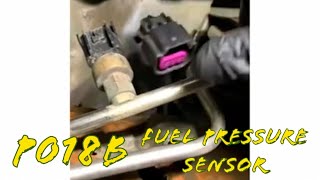
Causes of P018B engine code
From my time under the hood, most of the time, the real troublemaker is a faulty fuel pressure sensor. But don’t let that fool you-it isn’t always a straight shot. Here’s what I usually find:
- A bad fuel pressure sensor (hands down, the number one issue)
- Wiring that’s seen better days, or maybe just a loose or corroded connector in the sensor’s circuit
- Rarely, a PCM problem, like outdated software or an internal hiccup
My advice? Always start by checking the sensor and its wiring before you start hunting for gremlins elsewhere. And just so you know, the p018b trouble code shows up on plenty of Chevrolet and GM vehicles, not just one or two models.
Symptoms of P018B
If you’re dealing with a P018B code, there are some telltale signs you just can’t miss. First, that check engine light will stare you down-your car’s way of saying, “Hey, something’s up.” You might catch the engine running a bit rough, or even stalling when you least expect it. Sometimes, you’ll find the car suddenly stuck in ‘limp mode’-that’s when the computer puts on the brakes and limits power to save itself. Trust me, you don’t want to be out on the highway when that happens.
Common mistakes diagnosing obd code P018B
A classic mistake I see in the shop is folks immediately replacing the fuel pump or even the PCM without giving the sensor and wiring a fair shake. That’s a fast track to spending way more than you need to. Another big one? Skipping over dirty or loose connections. I’ve seen more cars fixed by cleaning a connector than you’d believe. Always, always check the simple stuff before you go for the big-ticket parts.
Repair procedures for P018B code
Here’s how I’ve seen this fixed time and time again, following both real-world repairs and the factory playbook:
- Swap out the faulty fuel pressure sensor
- Patch up or replace any rough wiring or dodgy connectors in the circuit
- If needed (though it’s rare), update or reflash the PCM
Start with the sensor and the wiring. Nine times out of ten, that’s what’ll clear up the gm dtc p018b 00 code for good.
Conclusion
So, here’s the bottom line: when you see a P018B code, your car’s computer isn’t happy with what it’s getting from the fuel pressure sensor. This isn’t something to ignore-it can quickly snowball into serious engine problems or even permanent damage. If you want to fix it right, go straight to the source: check and replace the fuel pressure sensor if need be, then comb through the wiring and connectors. Don’t drag your feet-tackle it in order and you’ll save yourself a lot of headaches, not to mention cash.
Video for "Error p018b" on YouTube
The following error codes are often searched for

 5748
5748 5 minutes of reading