
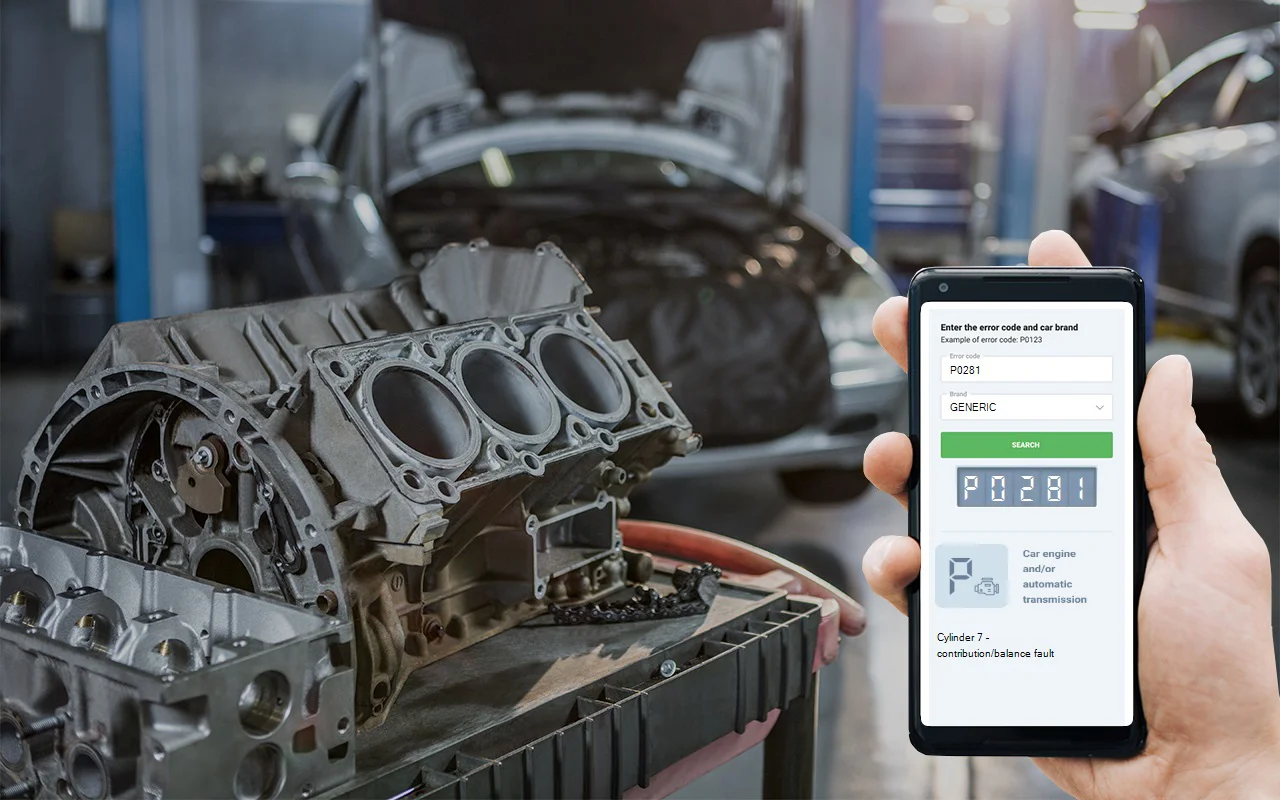
Whenever I see a P0281 code pop up, it tells me the vehicle’s computer has spotted that cylinder number 7 just isn’t carrying its share of the load. Let me put it in real-world terms: your engine relies on every cylinder doing its job, firing in sequence, and producing equal power. If one falls behind-say, cylinder 7 isn’t firing as strong-the PCM (powertrain control module) notices by keeping tabs on how quickly the crankshaft speeds up after each firing event. When that #7 cylinder doesn’t measure up, the PCM flags it with P0281. You’ll mostly run into this on V8 engines, because they’re the ones with a seventh cylinder. Basically, this whole setup is designed to make sure your engine runs smooth, fuel-efficient, and with balanced power. If a cylinder’s slacking off, you’ll know sooner rather than later.
DTC P0281
 3761
3761 6 minutes of reading
Causes of P0281 trouble code
From years in the shop, I can tell you p0281 almost always traces back to something going wrong with the fuel injector on cylinder 7. Let me break down the usual suspects I see when this code shows up:
- Faulty fuel injector-sometimes it’s stuck closed, other times it just fails outright.
- Gummed-up or clogged injector-dirt and debris can block the nozzle and starve the cylinder of fuel.
- Internal mechanical issues-think low compression or a sticking valve inside cylinder 7 itself.
- Problems with wiring-broken, corroded, or loose wires or connectors at the injector.
- PCM software glitches-rare, but a software update from the factory can sometimes be the fix.
If you’re chasing this code, always start with the injector and its wiring. Save the deep engine tear-downs for last, unless something else jumps out at you.
Symptoms of obd code P0281
When P0281 is active, you’ll notice some telltale signs. First up, the check engine light-always a warning sign. Then, there’s a good chance you’ll feel the engine running rough, especially when idling at a stoplight. Acceleration won’t feel right; the vehicle might hesitate, or just feel like it’s dragging its feet. Sometimes, drivers mention the engine sounds off, or that they’re burning through more fuel than usual. If any of these ring a bell, don’t wait around-the sooner you check it out, the better.

Diagnosis process for P0281
Here’s how I run down a p0281 code in my own shop, step by step:
- Start with a scan tool-confirm the code, then clear it to see if it comes back immediately.
- Check for any other codes. Sometimes, you’ll find clues hiding in related trouble codes.
- Take a close look at the wiring and connectors for cylinder 7’s injector. Look for anything out of place-loose pins, broken wires, or corrosion. Even a bent terminal can cause headaches.
- Grab a mechanic’s stethoscope and listen to the injector. If you hear it clicking, that’s a good sign it’s alive. Silence means trouble.
- If the injector wiring checks out, swap the injector from cylinder 7 with one from another cylinder. If the problem follows the injector, you’ve found your culprit.
- Still no luck? Time for a compression test on cylinder 7. Low numbers here point to internal engine problems.
- Finally, look for any PCM updates or technical service bulletins (TSBs) from the manufacturer. Sometimes, the fix is just a software flash away.
Some of these steps-like swapping injectors-go a lot smoother with an extra set of hands. Don’t be afraid to ask a buddy for help if you’re wrenching at home.
Common mistakes when fixing obd2 code P0281
A classic mistake I see is folks immediately replacing the fuel injector, only to find out later it was a wiring issue all along. Skipping over a careful inspection of connectors and wires will cost you-both in time and money. Another one? Ignoring the chance that there’s an internal engine problem. Just because the injector looks bad on paper doesn’t mean it’s the root cause. Not swapping injectors to confirm the fault leads to unnecessary parts being thrown at the car. And don’t brush off the possibility of a PCM update-sometimes, a simple software fix is all that’s needed to get things back in line. Rushing through the diagnosis usually comes back to bite you, so take your time and go step by step.

Seriousness of the P0281 code
I can’t stress this enough-don’t brush off a P0281 code. If you keep driving with a misfiring cylinder, you’re asking for trouble. Not only can it wreck your catalytic converter, but you’re risking bigger internal engine damage if you let it go too long. You’ll feel the hit in performance and at the pump, too. The longer you wait, the more it’ll cost you down the line. If you notice the engine running rough enough to stall or lose power mid-drive, that’s flat-out dangerous. So, take this one seriously and get it sorted ASAP.
Repair steps for dtc P0281
From what I’ve seen in the bay, these are the repairs that most often get a P0281 sorted:
- Give the fuel injector on cylinder 7 a good cleaning, or swap it out if it’s bad.
- Fix or replace any busted or corroded wiring and connectors leading to the injector.
- If you find low compression or mechanical issues in cylinder 7, you’ll need to tackle those internal engine problems head-on.
- If the dealer or manufacturer has released a software update or TSB about this code, get the PCM flashed.
My advice? Always start with the injector and wiring-they’re the usual suspects and the easiest to fix before digging deeper.
Conclusion
Bottom line: P0281 means cylinder 7 isn’t doing its job, and it’s usually down to a fuel injector or wiring problem. Don’t ignore it-leaving this code unchecked can snowball into much bigger (and pricier) issues, not to mention safety risks. Tackle the simple stuff first: check the wiring, test or swap the injector. Only move to engine internals if those come up clean. What I’ve learned over the years is that a methodical, step-by-step approach-starting with the basics-saves you time, cash, and headaches. Don’t let this one linger. Get it handled before your engine has a chance to protest louder.


