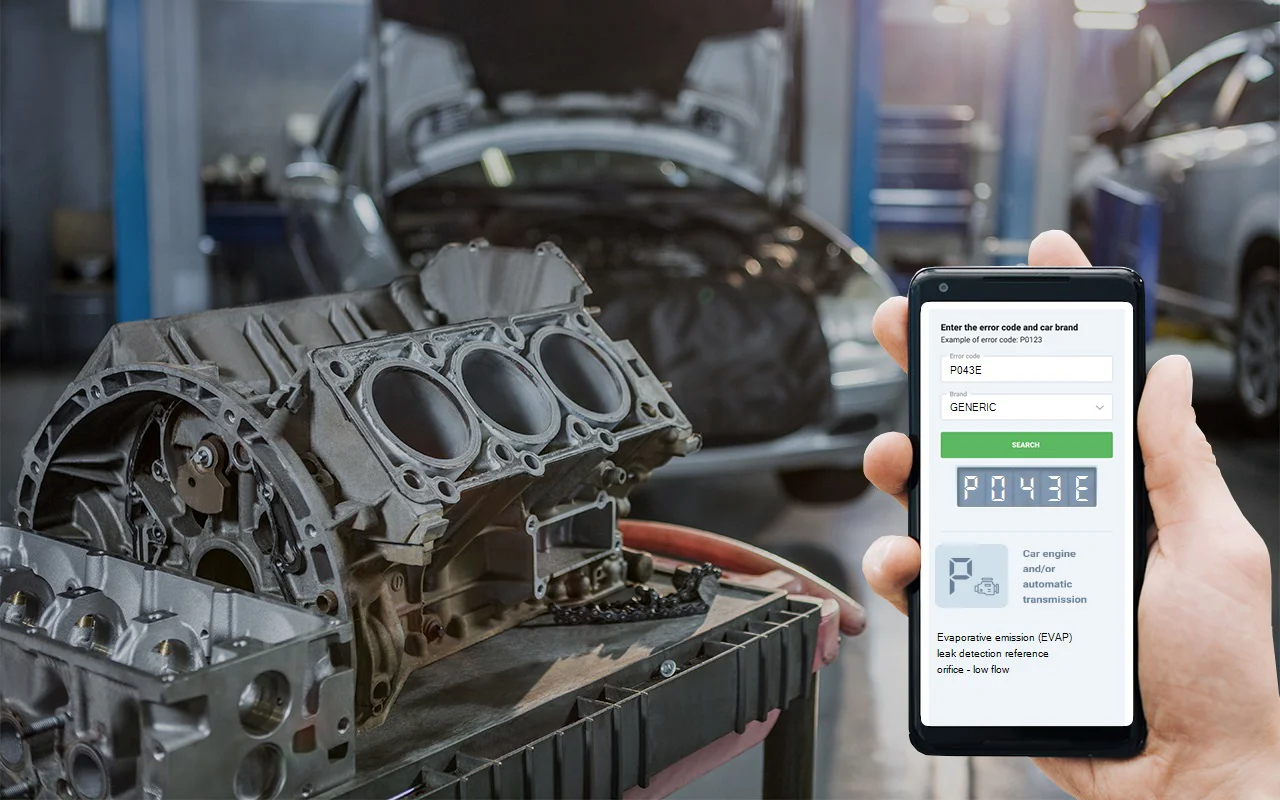
Whenever I see the p043e code pop up on a Toyota scan, I know right away we're dealing with a hiccup in the evaporative emission system-specifically, “Evaporative Emission System Leak Detection Reference Orifice Low Flow.” Let me put that in real-world terms: your car’s setup for catching and controlling fuel vapors (so you’re not polluting or losing gas to the air) isn’t working as intended, because the reference orifice-a tiny tube the system relies on to let air pass-isn’t flowing enough. In my years wrenching on these systems, I’ve found that the orifice is usually choked up with grime or debris. The whole EVAP system relies on this orifice, along with the leak detection pump and vapor canister, to run self-checks for leaks and keep vapors under wraps. When the powertrain control module (PCM) senses air isn’t moving through as it should-often thanks to a blocked orifice-it’ll throw the p043e code. Keeping this system in shape is essential for clean, efficient running, so if this code shows up, don’t brush it off.
DTC P043E
 5917
5917 5 minutes of reading
Causes of P043E trouble code
From my time under the hood, most p043e cases boil down to a handful of usual suspects:
- That reference orifice inside the detection pump getting plugged with crud-hands down, the most common reason this code shows up.
- Wiring or connector problems in the EVAP circuit, like frayed wires or a connector that’s just barely hanging on.
- Every so often, the PCM is the troublemaker-maybe it needs a software refresh, or it’s just got an internal bug.
In almost every case, I start by checking the orifice tube. But, to be thorough, I never skip a look at the wiring and a quick PCM check.
dtc P043E symptoms
Most folks first notice their check engine light glaring at them-sometimes that’s the only heads-up you’ll get. On occasion, I’ve had drivers tell me their gas mileage took a slight dip, so if you’re filling up more than usual, that’s another clue. Other than that, you probably won’t feel any change in how your car behaves. But don’t let the lack of obvious symptoms fool you-this isn’t something you want to sweep under the rug.

obd code P043E diagnosis
Here’s how I go about sorting out a p043e code, step by step:
- First thing, I always plug in the scanner and see what other EVAP codes might be hanging around. It gives me a roadmap before I even pop the hood.
- Next up, I do a visual once-over of the EVAP system-especially around the detection pump and that notorious orifice. I’m hunting for any obvious blockages, cracked hoses, or signs of tampering.
- Then, I check the wiring and connectors running to the detection pump. A gentle tug here, a close look for corrosion or loose pins there-sometimes, all it takes is a little wiggle to find the culprit.
- If everything’s looking clean so far, I’ll pull the detection pump and take a hard look at the orifice tube. If debris is clogging it, sometimes a good cleaning is all it needs. If it’s busted, I swap it out.
- If I’m still stumped, I’ll turn my attention to the PCM. It’s rare, but I’ve had to update software or even replace the PCM in a handful of stubborn cases.
Here’s a pro-tip from the garage: always double-check your service manual for your specific model before tearing into things. Not every Toyota plays by the same rules, especially with the EVAP layout.
P043E engine code common mistakes
A classic mistake I see-even from experienced techs-is to go straight for the expensive parts, like the detection pump or PCM, without first checking for a simple clog in the orifice tube. Overlooking wiring is another big one; a loose connector can trigger this code as quickly as a bad pump. And don’t forget to scan for other EVAP codes at the start-skipping that step can send you chasing your tail. Always start simple before you start throwing parts at the problem.

P043E code seriousness
Look, the p043e code isn’t likely to leave you stranded at the grocery store, but that doesn’t mean you should shrug it off. Left unchecked, a clogged orifice throws your whole EVAP system out of whack, letting extra fuel vapors escape, and chipping away at your gas mileage. Over time, you risk bigger headaches-like a fried vapor canister or a ruined detection pump. And if emissions testing is on the horizon, this code will get you a big red X. My advice? Don’t let this one linger. Address it before it snowballs into a bigger problem.
obd2 code P043E repair steps
Here’s what’s worked for me, time and again, when fixing p043e:
- Start by cleaning or replacing the gummed-up reference orifice tube-nine times out of ten, that’s your fix.
- Patch up or replace any sketchy wiring or connectors you find in the EVAP circuit.
- If there’s a known software bug, get the PCM updated-or swap it out if it’s truly toast (though that’s rare).
Always use the right parts kit for your Toyota, and double-check the exact steps in the service manual for your year and model. Skipping this can turn a simple job into a real headache.
Conclusion
Bottom line: p043e means your EVAP system can’t check for leaks like it should because the reference orifice tube isn’t letting enough air pass-usually thanks to a blockage. Ignore it, and you’re flirting with bigger, costlier problems down the road. My advice? Tackle the basics first-clear out any debris in the orifice tube, then check over your wiring-before you start worrying about pricier repairs. In my experience, a good cleaning or a fresh orifice tube fixes the issue most of the time. Stay on top of it, and you’ll keep your Toyota running clean, efficient, and ready for whatever the road throws your way.
- EVAPORATIVE EMISSIONS SMOKE TEST, FAILED LEAK DETECTION PUMP : 2013 TOYOTA COROLLA P043E P2402
- How to Diagnose and Fix P043E Engine Code - OBD II Trouble Code Explain

- Causes and Fixes Toyota P043E Evaporative Emission System Leak Detection Reference Orifice Low Flow
- 2016 RAV-4 EVAP CODES P2401, P2402, P043F, P043E