
Causes of P0469
From what I’ve seen in the shop and what’s confirmed by the official repair data, the most common causes for a p0469 code are:
- A break in the signal wire going to the Purge Flow Sensor-this happens more than you’d think, especially with older wiring.
- A short to voltage or ground in the sensor’s signal circuit-sometimes caused by damaged insulation or pinched wires.
- No power or ground getting to the sensor-could be a blown fuse, corroded connector, or a bad ground point.
- The Purge Flow Sensor itself failing-honestly, this is what I run into most often.
- Very rarely, a problem with the PCM (engine computer) itself, but that’s almost always the last thing I’d suspect.
In cases like this, it’s usually a wiring or sensor issue, not the computer.
Symptoms of P0469 trouble code
When this code pops up, here’s what drivers usually notice:
- The check engine light comes on-sometimes that’s the only sign.
- You might see a drop in fuel economy, since the engine isn’t managing vapor flow properly.
- In some cases, you could notice a faint fuel smell, especially near the back of the car, but that’s less common.
Most folks don’t notice any change in how the car drives, but the warning light and possible fuel smell are your main clues.

Diagnosis steps for obd code P0469
Let me walk you through how I size up a P0469 code-step by step, just like I do in the shop:
- First thing I reach for is the TSBs (technical service bulletins) for your car. Trust me, these can be a lifesaver and sometimes there’s a quick software update or a factory fix that’ll save you hours.
- Next up, I hunt down the Purge Flow Sensor. Usually, it’s hiding near the charcoal canister by the tank or sometimes perched on top of the pump module. When in doubt, a wiring diagram or a solid repair manual is your best friend.
- I always start with my eyes-scanning for cracked or chewed-up wires, loose connectors, or that all-too-familiar green corrosion on terminal pins. If you spot melted plastic or a connector that looks like it took a swim, you’re on the right track.
- Corroded terminals? I grab some electrical contact cleaner and a soft brush, give it a good scrub, let it dry, then hit it with a dab of dielectric grease before snapping it back together.
- Once I’ve tidied up, I’ll clear the code with my scanner and see if it returns. If it doesn’t, chances are it was just a crusty connection.
- If the code comes back, I get serious with electrical testing. With the key off, unplug the sensor and check for proper power and ground at the connector using a voltmeter. Most setups give you 12 volts or sometimes 5 volts-double-check your wiring diagram for the exact numbers.
- Missing power or ground? That’s your cue to trace the wiring back, hunting for breaks, shorts, or a blown fuse. If those are solid, I check for a proper signal voltage (usually 5 volts with key on).
- If everything checks out but the code lingers, I swap in a new Purge Flow Sensor. Only after all that do I even begin to suspect the PCM. And before blaming the computer, I go over every step, just to be sure I didn’t miss anything simple.
Here’s a pro-tip from the garage: always have a buddy nearby when you’re crawling under the car, and disconnect the battery before poking around electrical connectors. Safety first.
Common mistakes with obd2 code P0469
Let me tell you, the classic mistake is tossing a new sensor in without even glancing at the wiring or connectors. I see it all the time. Another one? Skipping the TSBs-sometimes the solution is a simple software tweak, not a hardware replacement. Folks also overlook corrosion or bent pins at the connector, and that’s an easy fix that solves a lot of headaches. Don’t skip the basics, or you’ll end up chasing your tail and spending way more than you need to.

Seriousness of dtc P0469
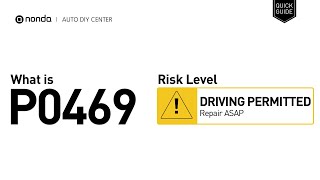
This is one of those codes you don’t want to brush off. If the root of the trouble is a stuck valve or a busted part in the EVAP system, you could be letting fuel vapors escape-and that’s not just bad for the environment, it’s a legit fire hazard. Even if it’s just an electrical hiccup, you’ll probably see worse gas mileage and risk failing your next emissions test. Ignore it long enough, and you might cook the charcoal canister, fry vent valves, or even damage the PCM if there’s a persistent short. I’ve seen little issues snowball fast, so trust me: don’t put this fix off.
Repair solutions for P0469 code
Here’s what’s worked for me time and again when tackling a P0469:
- Patch up or replace any damaged wires or connectors leading to the Purge Flow Sensor.
- Clean up any corroded terminals and use dielectric grease to keep future gremlins at bay.
- If your electrical tests point to a bad sensor or the code won’t go away after sorting the wiring, swap in a new Purge Flow Sensor.
- In those rare, hair-pulling cases, you might need to reflash or replace the PCM-but do that only after ruling out everything else.
- If there’s an updated TSB or software fix, get that done first. Sometimes it’ll solve the whole thing without turning a single bolt.
Whatever you do, double-check your repairs and clear the code. If it stays gone, you nailed it.



Conclusion
So, here’s what you need to remember: P0469 means your car’s brain isn’t getting straight info about vapor flow from the EVAP system-usually thanks to a flaky sensor or a wiring gremlin. Letting it ride can mean bigger headaches down the road, even safety issues. Start with the simple stuff-look for obvious wiring problems, check for corrosion, and see if there’s a TSB for your car. Don’t rush to replace parts without a thorough check. Working methodically and not skipping steps will get you back on the road without any nasty surprises.

 5705
5705 6 minutes of reading