
Causes of dtc P0697
From my time in the shop and countless service bulletins, here’s what I see triggering P0697 most often:
- Wiring issues-broken, corroded, or disconnected wires and connectors in the sensor circuit
- Blown fuses or faulty fuse links feeding power to the sensor
- System relays on the fritz, cutting off power when they shouldn’t
- Flat-out sensor failure
Honestly, nine times out of ten, you’re looking at a wiring problem-maybe a harness rubbed through on a bracket, or a connector corroded from road salt. But don’t overlook a dead sensor or a sneaky blown fuse. Here’s a pro-tip: start with the easy stuff. Trace wires, check fuses, and only then think about buying parts.
Symptoms of P0697 code
If you’ve got P0697, you’ll probably notice some clear signs. Here’s what folks usually tell me when they roll into the garage:
- Transmission stuck-won’t switch between sport and economy modes
- Shifts feel rough, take longer than usual, or just refuse to happen
- Transfer case won’t swap between high and low gear ranges
- Front diff or hubs won’t kick in
- Speedometer or odometer goes haywire or quits altogether
Whenever shifting or drive modes get weird, suspect a sensor issue first. And if your check engine light’s on, don’t just shrug it off-ignoring this stuff can make things much worse in a hurry.

Diagnosis steps for P0697
When I’m tracking down a P0697, here’s the step-by-step I’d use-and you can follow these if you’re comfortable with some basic tools:
- Start with the fuse box. Pull and test every fuse and link tied to the sensor circuit. A fuse can look perfect but still fail when the system’s under load.
- Next, eyeball the wiring harness and connectors. I use a good work light to spot frayed wires, loose connections, or corrosion. Sometimes it helps to have a buddy wiggle wires while you watch for changes.
- Hook up a scan tool and jot down any stored codes and freeze-frame data. This saves you from chasing ghosts if the problem’s intermittent.
- Clear the code, take a short spin, and see if it returns. If it does, the fault’s still live.
- If all looks good so far, grab a digital voltmeter. Check for the reference voltage (usually 5 volts) and solid ground at the sensor connector. Missing voltage or ground means tracing back to the PCM for continuity checks.
- When voltage and ground are right, check the sensor’s resistance and continuity against factory specs. If it’s way off, swap the sensor.
- For sensors that send more complicated signals, like electromagnetic ones, I bust out the oscilloscope to catch glitches or a dead line.
One thing: always unplug any control modules before doing resistance tests. That’s a rookie mistake that can fry expensive electronics. Cover the basics before going deeper-you’ll save time and headaches.
Common Mistakes with obd2 code P0697
Here’s something I see all the time-someone will swap out a sensor right off the bat, skipping the simple checks. That’s a fast track to wasting cash. Another pitfall? Overlooking other codes that come up alongside P0697. Fix the specific ones first; they’re the real clues. I’ve also seen techs skip load-testing fuses, trusting their eyes instead of a meter-and that’s how intermittent problems slip through. Don’t forget those connectors either: dirty, loose, or corroded pins can mimic a sensor failure. Slow down, check everything, and you’ll avoid a lot of headaches.

How Serious is a P0697 trouble code
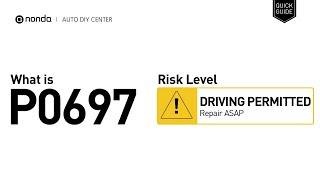
Make no mistake-this isn’t a minor nuisance. If P0697 is affecting how your transmission or drivetrain engages, you’re risking breakdowns or even dangerous situations on the road. Lose gear engagement or drive modes, and you could be stranded or stuck in the wrong gear. Left unchecked, this can snowball into bigger damage-transmission, transfer case, or even the PCM itself. So, don’t put it off. The sooner you tackle it, the less you’ll pay and the safer you’ll be.
Repair tips for obd code P0697
Here’s what’s worked for me and the dealership techs I know when fixing P0697:
- Patch up or swap out any damaged wires and connectors in the sensor circuit
- Replace any blown fuses or bad fuse links
- If the relay’s bad, toss it for a new one
- If the sensor doesn’t pass resistance or continuity checks, it’s time for a replacement
- Clear the codes and take the car for a test drive to make sure the fix holds
Always start with wiring and fuses-they’re usually the root cause and much cheaper than sensors or modules. Double-check your work by making sure the PCM enters readiness mode after the repair, confirming everything’s back in order.



Conclusion
So, here’s the takeaway: P0697 means your car’s computer isn’t hearing from a key transmission or drivetrain sensor, most likely due to an open circuit. This isn’t something you want to brush off-it can seriously mess with how your vehicle shifts and drives. Your best bet is to start simple: check fuses, wiring, and connectors, then test the sensor itself. Catching this early keeps your car running right and saves you from bigger, pricier problems. Take care of it, and you’ll keep your wheels-and your wallet-safe.
 4336
4336 6 minutes of reading