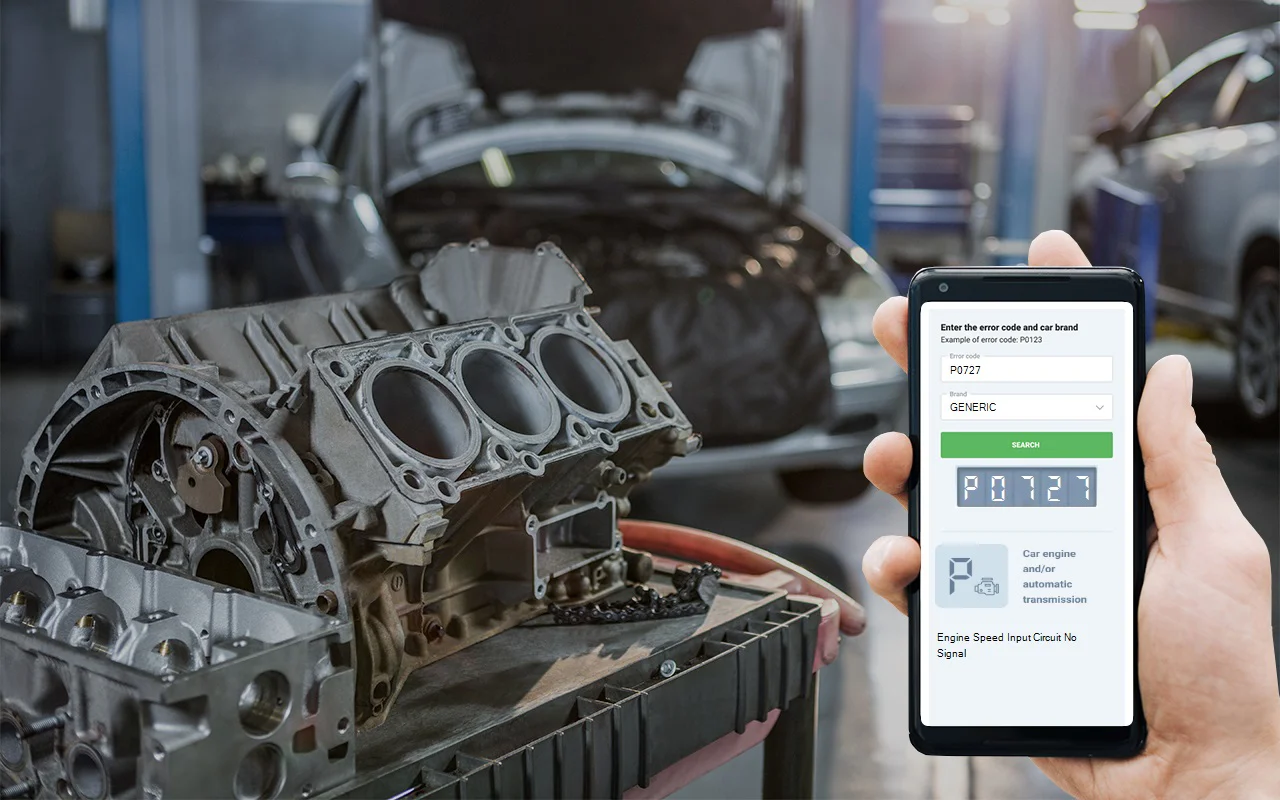
P0727 is one of those codes I see crop up when the car's computer isn't hearing from the engine speed sensor like it's supposed to. Let me put it simply: the system that lets your transmission know how fast your engine's spinning has gone quiet. And that's a big deal, because the transmission control module (TCM) depends on that signal to figure out when to shift. If it can't “see” the engine RPM, your shifting goes all out of whack. Usually, this signal is coming from a sensor bolted to the engine or transmission, with the info routed through a harness to both the powertrain control module (PCM) and the TCM. If that signal drops out, boom-you get a P0727 code. This one's pretty standard across most brands, but always crack open your manual for any curveballs specific to your ride.
DTC P0727
 6059
6059 5 minutes of reading
Causes of P0727 code
From my time under the hood, the most frequent offender behind a p0727 code is a bad engine speed sensor. These little guys take a beating over time or get gunked up with debris. Next on the usual suspects list? Wiring issues-think cracked insulation, corroded pins, or a connector that's just barely hanging on. Every now and then, I've seen the PCM or TCM itself take a dive, but that’s not where you start hunting. Here's what typically triggers this code in my experience:
- Engine speed sensor failure (this one tops the list)
- Wiring gremlins-damaged wires, sketchy connections, or corrosion
- PCM (powertrain control module) giving up the ghost
- TCM (transmission control module) acting up
My advice? Always begin with the sensor and wiring-those are usually your trouble spots before pointing fingers at the control modules.
Symptoms of P0727
If you’re facing a p0727, you’ll notice some telltale signs pretty quickly. First off, that check engine light will be staring you down-that’s your car’s way of saying, “Hey, pay attention!” You might feel your transmission hunting for gears or shifting at odd times. I’ve seen cars get sluggish or even act like they’re dragging an anchor-acceleration drops, and so does your fuel mileage. Sometimes the transmission throws itself into limp mode as a self-defense move. Here’s what you’re likely to spot:
- Check engine light staring right at you
- Shifting that feels rough or just plain wrong
- Your gas mileage heading south
- Hesitation, or the engine just not pulling like it should

Diagnosis steps for P0727 trouble code
Whenever I’m tracking down a p0727, I start with the basics. Don’t skip the simple stuff! Make sure you’ve got a solid battery and the connectors at the engine speed sensor are clean and locked in. Next, I grab the scan tool to confirm the code and see if any friends are tagging along-related codes can give you more hints. I follow that up with a close look at the wiring harness between the sensor and both the PCM and TCM. I’m looking for chafed wires, corrosion, or any signs of tampering. If the wiring checks out, I’ll test the sensor itself-usually by measuring resistance with a multimeter and comparing it to the spec in the manual. If that passes, I check the wiring for continuity and shorts. Only after all that do I start thinking about the PCM or TCM as the bad actors. Here’s a pro-tip: having someone watch live data while you run the engine can save a ton of time-you want to see if the engine speed readings are dropping out. And don’t overlook technical service bulletins (TSBs); sometimes the manufacturer has already mapped out a fix for you.
Common Mistakes with obd2 code P0727
A classic mistake I see is folks swapping out the sensor right away and ignoring the wiring altogether. Loose or corroded connectors are sneaky troublemakers-don’t let them slip by. Another misstep? Blowing off related codes. Sometimes there's a bigger electrical gremlin lurking. And skipping basic checks like fuses or battery voltage? That’ll waste your time fast. Stick to the step-by-step process and don’t fall for the trap of blaming the most expensive part right out of the gate.

Seriousness of dtc P0727
This code’s no joke-don’t shrug it off. When your transmission can’t keep tabs on engine speed, shifting gets unpredictable, and that’s risky business on the road. You could end up stuck in one gear, lose power, or even toast the transmission if you ignore it. In some cases, the car goes into limp mode and barely lets you move-not a great place to be in heavy traffic. Letting this go can snowball into damaged transmission, fried modules, or even engine trouble. If you ask me, this is the kind of issue you tackle now, not later.
Repair solutions for P0727 engine code
When it comes to fixing a P0727, I almost always start with the engine speed sensor-if it's out of spec or just not putting out a signal, swap it. If the wiring’s compromised, repairing or replacing those wires and connectors is next on my list. Sometimes, a little terminal cleaning is all it takes to bring everything back online. If both the sensor and wiring check out, you might need to update or reflash the PCM or TCM, or in rare cases, replace one of the modules. Whatever the fix, always clear the code and take the car for a proper test drive before calling it good.
Conclusion
Bottom line: P0727 means your car’s computer isn’t getting engine speed data, and that spells bad news for shifting and drivability. Treat this as a high-priority fix, because letting it slide can land you with much bigger headaches down the road. Start your troubleshooting with a thorough check of the sensor and wiring-nine times out of ten, that’s where the issue lives. Don’t wait; staying on top of this keeps your car running strong and safe. The smartest move is to follow a step-by-step diagnosis and repair what actually needs fixing-don’t just throw parts at it.