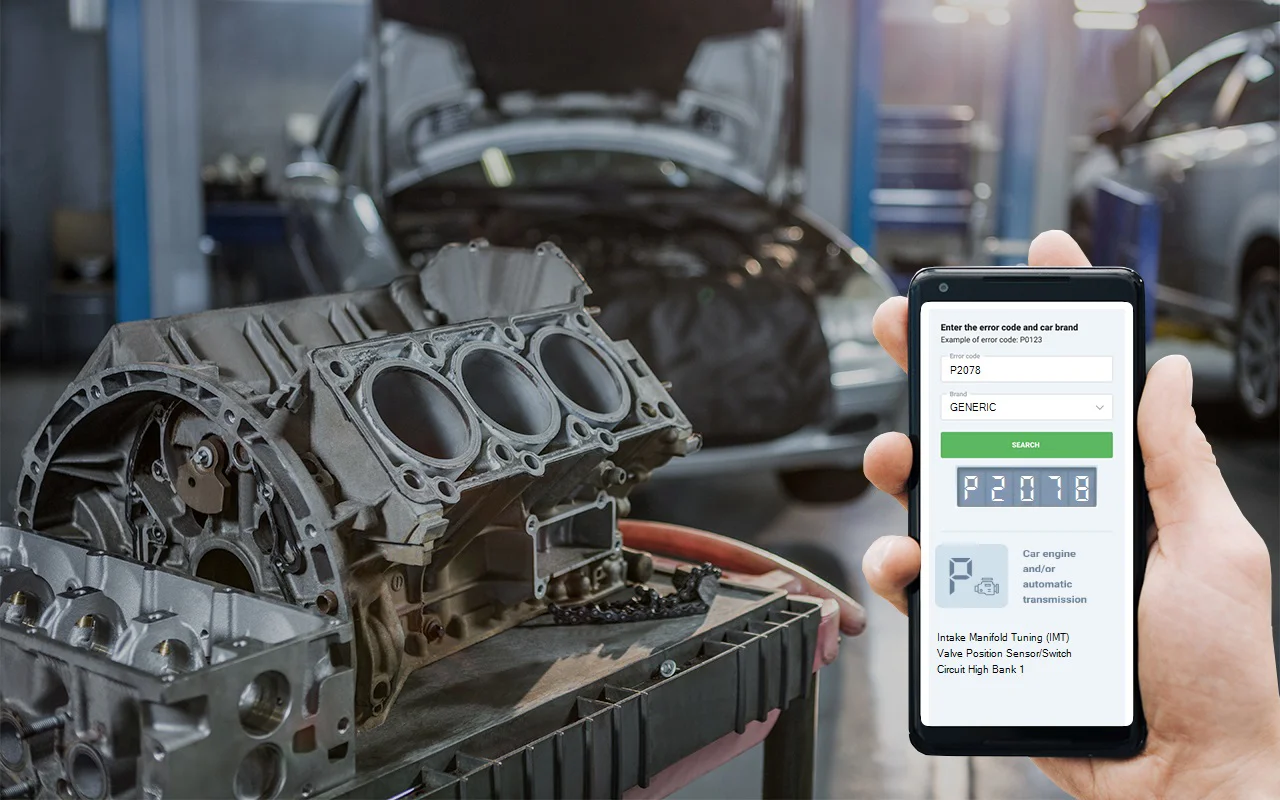
When you see that P2078 code show up, here’s what’s actually going on: your car’s PCM-think of it as the engine’s brain-has picked up a signal from the intake manifold tuning (IMT) valve position sensor on Bank 1 that just doesn’t add up. In my years wrenching, I’ve seen this sensor trip folks up plenty of times. Its job? It tells the computer exactly where the IMT valve is sitting. That valve is crucial because it controls how much air your engine gets, which directly impacts your power and fuel mileage. If the sensor gets flaky or the valve hangs up, suddenly the computer loses track of airflow and can’t juggle things the way it should. That’s when you get that P2078 code staring back at you. On a lot of modern vehicles, these tuning valves adjust internal flaps to let more or less air in, depending on what you’re asking the engine to do. If the system can’t pinpoint where those flaps are, you’ll get the warning. In other words, your car’s telling you it’s lost track of its own breathing system.
DTC P2078
 5096
5096 6 minutes of reading
Causes of dtc P2078
From my time in the shop, here are the main reasons you’ll see a p2078 code pop up:
- A bad intake manifold tuning valve position sensor. Nine times out of ten, that’s the guy causing trouble.
- Wiring issues-broken wires, corroded pins, or loose connectors are classic. You’d be surprised how often a chewed or pinched wire is the root of it all.
- The intake manifold tuning valve itself has failed or is stuck. Sometimes it’s mechanical, other times it’s internal electronics.
- Rarely, the PCM itself is at fault, or there’s a software glitch that needs a reflash. But honestly, that’s the needle in the haystack compared to the other problems.
If you’re tracking down this code, I always tell folks to start by checking the sensor and the wiring-those are your most likely culprits.
Symptoms of obd code P2078
Here’s what you can expect if P2078 is haunting your dashboard:
- Check engine light comes on. Sometimes, that’s the only sign, especially early on.
- Engine might idle rough or feel a bit shaky.
- You hit the gas and notice a lack of power, especially when merging or passing. It just feels gutless.
- Fuel economy goes down the drain. Suddenly, you’re filling up way sooner than you used to.
I’ve seen some cars just toss the light with no other issues, but others can run downright lousy until you sort it out. It really depends on the make and model.

Diagnosis steps for P2078 engine code
If you’re trying to nail down what’s causing P2078, here’s how I tackle it in the bay:
- First thing’s first-visual inspection. Open the hood and eyeball the intake manifold tuning valve and its harness. Look for cracked wires, loose plugs, or anything that’s out of place. You’d be amazed how often a simple unplugged connector is the whole story.
- Next, grab a scan tool and clear the code. Fire up the car and see if it comes back right away. If it does, you know the fault’s still there and not just a fluke.
- Now, if you’ve got a multimeter handy, check voltage and continuity at the sensor’s connector. What I like to do is have a buddy gently move the wires while I watch the readings-sometimes those faults only show up when things are flexed just right.
- After the wiring, take a close look at the IMT valve itself. If you have scan tool control, try commanding the valve open and closed. Listen for clicks or movement. No noise or no movement? That’s a red flag right there.
- If everything else checks out but you’re still stuck, then-and only then-do I consider a PCM issue or software update. I always check for TSBs for the specific car I’m working on, since some brands have known fixes for this code.
Here’s a pro-tip from the garage: always start simple before you start tearing things apart or ordering expensive parts.
Common mistakes with obd2 code P2078
I’ve watched plenty of people chase their tails on this code. Here are the big mistakes I see way too often:
- Throwing parts at the problem-like swapping the entire intake manifold or PCM-before checking the basics like wiring. That’s just burning cash.
- Missing a loose or rusty connector. Sometimes all it takes is unplugging and re-plugging, or a quick shot of contact cleaner, to fix the issue.
- Not looking up TSBs or checking for PCM updates. There are times when the dealer already knows about a quirk and has a fix ready to go.
- Skipping the step of clearing the code and seeing if it comes back. Sometimes, it’s just a one-off glitch from a voltage drop or battery swap.
Bottom line? Don’t ignore the basics. They save you time, money, and a lot of frustration.

How serious is P2078
Let me put it this way: you probably won’t end up stranded on the side of the highway right away, but letting a p2078 code slide is asking for trouble. Your engine can start running rough, you’ll burn more fuel, and you risk further damage if you keep ignoring it. Over the long haul, a messed-up air/fuel mix can foul your spark plugs, toast your catalytic converter, or even trigger misfires. If you need your car to get you to work every day, don’t let this one wait. Things can go downhill in a hurry if you leave it unchecked.
Repair solutions for P2078 trouble code
Here’s what’s worked for me-and what the OEMs usually recommend-when it comes to fixing P2078:
- Patch up or swap out any busted wiring or corroded connectors at the sensor. That fixes it more often than you’d think.
- If the sensor is shot or its readings don’t make sense, replace it. They’re usually not too pricey.
- If the IMT valve itself is stuck or dead, you’ll need to repair or replace it. Sometimes a cleaning does the trick, but not always.
- If it turns out there’s a software bug, you’ll need to reflash the PCM with the latest update from the manufacturer.
- On those rare occasions the PCM is actually bad, you may need a replacement. But don’t jump to that until everything else checks out.
My advice? Always start with the wiring and the sensor. They’re the most common problems, and fixing them is usually friendly on your wallet.
Conclusion
At the end of the day, a p2078 code means your engine’s computer isn’t buying what the IMT valve position sensor is telling it, and that spells trouble for how your motor runs. You want to get on top of it quickly, because what starts as a simple fix can snowball into a more expensive headache if you ignore it. Always begin with a sharp look at the wiring and sensor-those are your usual suspects. Only chase the valve or PCM if the basics check out. Trust me, quick action here will keep your ride happy, your wallet fatter, and your mind at ease on the open road.