
Causes of P2160 trouble code
From experience, the most common reasons for a p2160 code are usually pretty straightforward. Here’s what I see most often:
- Faulty transfer case output speed sensor (TCSS) - the sensor itself can fail or wear out over time.
- Wiring issues - things like broken wires, corroded connectors, or loose plugs in the circuit leading to the sensor.
- Electrical faults - sometimes the problem is inside the sensor or the wiring harness, like a short or open circuit.
- Connector problems - water intrusion or dirt in the connector can cause poor contact.
- Less commonly, a problem with the vehicle’s computer (PCM/TCM) or internal transfer case damage affecting the sensor’s ability to read speed.
Most often, it’s the sensor or the wiring at fault, not the computer or the transfer case itself.
Symptoms associated with P2160 engine code
When this code is active, you’ll probably notice a few things. The most obvious is the check engine light coming on. Depending on your vehicle, you might also see issues with shifting-like harsh or delayed gear changes. Sometimes, the four-wheel drive system won’t engage or disengage properly. In some cases, traction or stability control might be disabled. If you’re driving and things just don’t feel right-maybe the transmission acts up or you lose some features-this code could be the culprit.

Diagnosis process for P2160
When I’m chasing down a P2160, I always start with the basics. First thing: check your wiring and connectors at the transfer case speed sensor. Make sure everything’s clean, dry, and plugged in tight. You’d be surprised how many headaches are caused by a loose or dirty connector. Sometimes, simply unplugging and plugging it back in does the trick. After that, I’ll eyeball the wiring for any obvious trouble-look for frayed wires, corrosion, pinches, or anything out of the ordinary. If it all checks out, I grab my multimeter to test for proper voltage and continuity through the circuit. Got a scan tool handy? Pull up the live data for the speed sensor. If it’s stuck at zero when you’re rolling, that’s a dead giveaway the sensor’s toast. If the wiring looks good but you’re still getting nowhere, I’ll pull the sensor out and check it for damage or debris. Sometimes a bit of cleaning saves the day, but if the sensor’s busted or not sending a signal, it’s time for a new one. Pro-tip: having a helper to spin the wheels while you watch live data makes life a lot easier during diagnosis.
Common mistakes when fixing obd2 code P2160
A classic mistake I see is folks swapping out the sensor right away without ever checking the wiring or connectors. You wind up spending money for nothing if the real problem is a crusty connector or a split wire. Another thing people miss? Water or dirt hiding in the connector. That stuff causes flaky, hard-to-find problems. And don’t skip the live data check-if you do, you might miss the actual reason the code’s there. Always start with the simple checks before you pull your wallet out for a new part.

Seriousness of obd code P2160
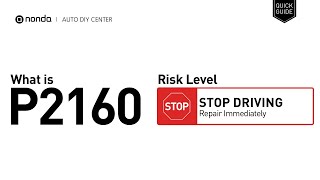
Don’t make the mistake of brushing this one off. If your transfer case speed sensor isn’t doing its job, you could lose features like traction control or four-wheel drive, and your transmission could start acting up with weird or unsafe shifts. I’ve seen things go sideways fast when people ignore this code-drivability takes a big hit, and if you let it go, you’re risking damage to the transfer case, transmission, or even the computer from lingering electrical faults. My advice? Treat this as a high-priority issue. Fix it before you end up stranded or facing a much bigger repair bill.
Repair steps for dtc P2160
Here’s how I tackle a P2160 problem in the shop:
- Swap out the transfer case output speed sensor if it’s faulty or not giving a reading.
- Patch up or replace any damaged wires or connectors in the sensor circuit.
- Clean and reseat your connectors to make sure you’ve got solid contact.
- After making repairs, clear the code, then take the car for a spin to make sure it’s fixed.
- On rare occasions, if the sensor and wiring are fine, look at the vehicle’s computer or check inside the transfer case for deeper issues.
Always start with the sensor and wiring-they’re almost always the root cause before you start hunting down more complicated problems.
Conclusion
So, here’s what you need to know: P2160 means your vehicle isn’t seeing the right signal from the transfer case speed sensor, and that’s a big deal for shifting and keeping your drivetrain in check. Don’t put this off-wait too long, and you’re risking traction control loss, shifting nightmares, or even real drivetrain damage. My advice? Begin with a careful inspection of the sensor and wiring, replace what’s needed, and always confirm your fix with a good test drive. Take care of it now-it’s the best move for your safety and your car’s health.
 4835
4835 5 minutes of reading