
Causes of P2325 trouble code
From experience, the most common reasons I see for p2325 are:
- A faulty ignition coil (the one labeled 'I' or number 9, depending on your vehicle)
- Wiring problems-like an open (broken) or shorted (touching where it shouldn't) wire in the coil's harness
- Poor electrical connections at the coil or PCM-think loose, corroded, or damaged pins in the connectors
Most often, it's a bad coil or a wiring issue, but I've seen all three pop up in the shop. Each brand is a little different in how they label the coil, but the underlying causes are the same.
Symptoms of P2325 engine code
If p2325 is active, you’re going to notice some telltale signs. For starters, the check engine light will almost always glare back at you. Drivers usually report the engine running rough, stumbling on acceleration, or feeling a misfire. Sometimes, it’s a loss of power or the engine shaking while idling-hard to miss if you pay attention. In more stubborn cases, starting the car becomes a chore, or it might even stall on you. If any of this sounds familiar, don’t be surprised if p2325 is waiting in your car’s memory.

Diagnosis steps for dtc P2325
Here’s how I usually tackle a p2325 code:
- First, I recommend starting with a visual inspection. Pop the hood and look at the ignition coil in question and its wiring. Check for any obvious damage-cracked insulation, burnt spots, or loose connectors. Don’t forget to look for corrosion on the terminals.
- Next, unplug the coil connector and inspect the pins. Make sure none are bent, pushed out, or green with corrosion. It’s better to have someone assist you here so you don’t accidentally damage the connector.
- After that, I use a multimeter to check for continuity and shorts in the wiring between the PCM and the coil. If you’re comfortable with a meter, you can do a basic check for open or shorted wires. If not, it’s best to leave this to a pro.
- If the wiring checks out, I’ll swap the suspect coil with another cylinder (if possible) and see if the code follows the coil. If it does, you’ve got a bad coil. If not, the problem is likely in the wiring or the PCM itself.
- Before moving on, make sure to clear the code and see if it returns after your checks or repairs. Sometimes, a simple connector cleaning is all it takes.
Common Mistakes When Fixing P2325 code
A classic mistake I see is folks jumping straight to replacing the ignition coil without checking out the wiring or the connectors first. That’s a quick way to waste cash if the real issue’s just a loose or corroded pin. Another thing? Not swapping coils to see if the problem follows. This move alone can pinpoint a bad coil and save you a lot of guesswork. Don’t overlook the simple stuff-sometimes, a dirty connector is all that stands between you and a perfectly running engine. Skip these steps, and you’ll likely be chasing your tail and buying parts you don’t need.

How Serious is obd code P2325
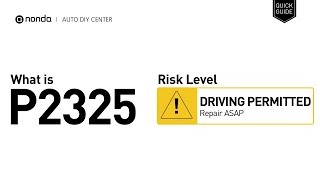
Make no mistake-this is a code you don’t want to brush off. A faulty ignition coil circuit spells misfires, and those can torch your catalytic converter in no time. That’s not just an expensive fix; it’s a wallet-buster. On top of that, driving around with a misfire puts you at risk-imagine needing power and your engine just isn’t there for you. I always tell customers: handle this fast or you’ll be looking at bigger headaches (and invoices) down the road.
Repair Options for P2325
When p2325’s on my bench, here’s the usual game plan:
- Swap out the bad ignition coil (this fixes it more often than not)
- Patch up or replace any busted or shorted wiring and connectors in the coil’s circuit
- Clean and make sure all connections at the coil and PCM are tight and corrosion-free
- If you’ve tried everything and the problem’s still there, it might be time to check if the PCM itself has kicked the bucket-rare, but I’ve seen it once or twice
My advice? Nine times out of ten, it’s the coil or the wiring. Double-check everything before you clear the code and send the car back out-miss something simple, and that light’s coming right back.


Conclusion
So there you have it: p2325 is your car’s way of waving a big red flag about high voltage in one ignition coil’s control circuit. It’s not something to let slide-left alone, it’ll turn a simple fix into a pricey repair. Take a methodical approach: inspect the coil, check your wiring and connectors, and don’t be afraid to swap parts to confirm the culprit. Tackle it now, and you’ll save yourself a pile of frustration (and cash) down the road. Trust me, you’ll thank yourself later.

 5308
5308 5 minutes of reading