
Causes of P2783 trouble code
From my years wrenching on these, and according to the official repair guides, the top culprits behind a p2783 code are usually:
- Internal transmission problems-think worn-out parts or components inside the transmission that just aren’t playing nice anymore.
- A faulty torque converter clutch-when that clutch isn’t locking up or letting go like it should, you get extra heat, plain and simple.
- Wiring or connector issues-believe it or not, I’ve chased my fair share of these down to a frayed wire or a corroded connector by the transmission or its sensors.
Most times, you’re looking at the torque converter clutch as the main villain, but don’t rule out wiring problems-they’ll surprise you. Always check all the bases before you start throwing parts at the problem.
Symptoms of P2783 engine code
Here’s what you’ll usually notice when this code shows up: that dreaded check engine light (or service engine warning) pops on. You might feel the transmission slipping or catch the shifts feeling rougher than normal. Sometimes, if things get bad enough, the car will go into limp mode-basically locking you into one gear with limited power to keep things from getting worse. In some of the worst cases, you’ll catch a whiff of something burning, or even see the engine temp start to creep up. But honestly, a lot of the time, all you get is that warning light, with no other clues until you dig deeper.

Diagnosis steps for P2783
When I’m tracking down a p2783 code, here’s my playbook:
- First thing-check the transmission fluid. Is it low or looking dirty? That alone can cause overheating. Top it off or swap it out if needed.
- Next, take a close look at the wiring harness and connectors on the transmission. I’ve found plenty of issues just from a careful inspection-broken insulation, corrosion, or loose plugs. Sometimes having a buddy wiggle the harness while you watch the scan tool can reveal an intermittent fault.
- After that, I’ll plug in a scan tool and hunt for any other related codes. Sometimes, another code points straight to the real problem.
- If those steps check out, I’ll keep an eye on the live transmission temperature readings while the engine’s running. If the temp spikes quickly or stays hot, that’s a pretty good sign you’ve got a real issue.
- Still stumped? I’ll take the car for a road test with the scan tool hooked up, paying close attention to the torque converter clutch-watching its engagement and slip. If it’s not acting right, that’s your smoking gun.
- If you’re not comfortable with any of this, don’t risk it-internal transmission and torque converter stuff can get complicated real fast. Sometimes you just need to call in a pro.
One more thing: always check for technical service bulletins (TSBs) for your exact make and model. Manufacturers sometimes put out updates or fixes for issues like this, and they can save you a ton of time and hassle.
Common Mistakes when troubleshooting dtc P2783
A classic mistake I see is folks going straight for a new torque converter without doing the basics first. Don’t skip checking the fluid, or ignore the wiring and connectors-that’s the kind of shortcut that gets expensive in a hurry. Another big one is not using a scan tool to check live data; you just can’t guess your way through this kind of problem. And let’s not forget about those TSBs-overlooking them means you might miss an easy fix. Take your time and work through things step by step before you start swapping out the pricey parts.

Seriousness of obd2 code P2783
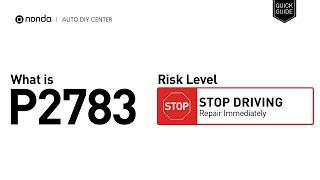
Let me be blunt: this is a serious code, not something to shrug off. High torque converter temps can destroy your transmission in no time. If you ignore it, you’re risking burned clutches, fried solenoids, or a total transmission failure. I’ve seen cars towed in with this code after the owner kept driving, and the bill wasn’t pretty. Don’t gamble-deal with p2783 as soon as you see it. Your transmission (and your wallet) will thank you.
Repair solutions for P2783 code
Here’s what I typically do, and what the official procedures suggest, to fix a p2783 code:
- Fix or replace any busted wires or crusty connectors going to the transmission or its temp sensors.
- Change out the transmission fluid and filter if it’s dirty or low-you’d be amazed how often this solves the problem.
- If the torque converter clutch is toast, you’ll need to swap it out.
- For internal transmission damage, sometimes you’re looking at a rebuild or replacement.
Always start with the easy stuff-fluid and wiring-before you commit to the big-ticket repairs. Catch it early, and you might dodge a major repair bill.
Conclusion
Here’s the bottom line: p2783 means your transmission’s torque converter is running hotter than it should-usually thanks to a clutch, an internal fault, or sometimes just a wiring gremlin. Don’t put this on the back burner; the risk of major transmission trouble is real. Work through the diagnostics methodically, starting with the simple stuff like fluid and wiring. The sooner you nail down the root cause, the better chance you’ve got of avoiding a huge repair down the line. Fix it right, fix it fast, and you’ll keep your car running strong.
 4029
4029 6 minutes of reading