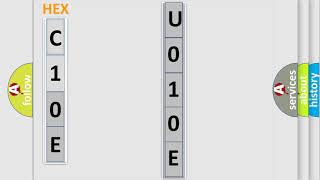
Let me put this in real-world terms for you. When you see Diagnostic Trouble Code U010E show up, what’s happening is your vehicle’s main computer-what we in the trade call the Powertrain Control Module or PCM-has lost its line of communication with the Reductant Control Module. That module’s a crucial piece of the Selective Catalytic Reduction (SCR) system, especially on diesel rigs, because it manages the injection of DEF (Diesel Exhaust Fluid) to keep your emissions in check. The PCM expects to get regular updates from the Reductant Control Module (stuff like Message $092, $4CC, $4CD, $4E5, $4E6, $4E7, $4E8, and $4E9), and when those go missing, it throws the U010E code. In plain English: your vehicle’s brain can’t talk to the module that’s in charge of making sure you’re not spewing excess pollutants. This isn’t just paperwork for the EPA-it’s absolutely critical for performance, reliability, and keeping you legal at inspection time.
DTC U010E
 4832
4832 6 minutes of reading
Causes of obd code U010E
Now, after years of chasing these issues down, I can tell you the root cause for a U010E is almost always something simple-wiring or connections, more often than not. Here’s what’s at the top of my troubleshooting checklist:
- Wiring harnesses or connectors that are loose, corroded, or damaged between the PCM and Reductant Control Module
- A Reductant Control Module that’s given up the ghost
- A blown fuse or a bad relay anywhere in the SCR circuit
- Glitches or actual faults in the CAN (Controller Area Network) bus, like a short or open circuit
- The PCM itself going bad (rare, but I’ve seen it once or twice)
Honestly, nine times out of ten, it’s a bad connection or moisture getting into the wiring-especially if your vehicle’s seen salty winter roads or someone’s been poking around under the hood recently.
Symptoms of U010E engine code
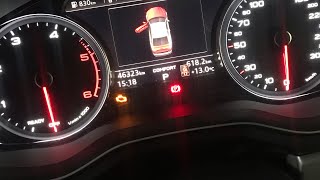
So, what’s your car trying to tell you when a U010E pops up? Typically, the check engine light’s the first thing you’ll spot, maybe followed by a message about the emissions system or DEF. Sometimes you’ll get thrown into limp mode, where the vehicle limits your power to protect itself. You might notice a rough idle, sluggish acceleration, or even a hard start if the system’s unhappy enough. Ignore it for long, and you could end up with a vehicle that won’t start, or one that’ll flunk any emissions test, no questions asked.

Diagnosis steps for U010E code
Here’s my tried-and-true method for getting to the bottom of a U010E code-don’t overthink it, but don’t skip the basics either:
- First thing I do is check battery voltage and make sure every ground connection is clean and tight. Low voltage or a bad ground can cause all sorts of ghost codes.
- Next up, I look at every fuse and relay tied to the SCR and Reductant Control Module. If they’re blown, corroded, or look sketchy, I swap them out.
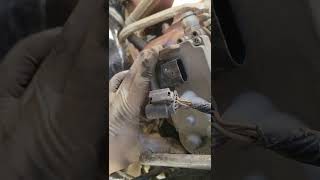
- Then, I get my hands dirty inspecting the wiring harness and connectors between the PCM and Reductant Control Module. Look for loose pins, green corrosion, cracked insulation, or signs of past water leaks. Here’s a pro-tip: have someone gently wiggle the harness while you’re watching the scan tool to see if anything changes.
- After that, I use a scan tool to try and talk to the Reductant Control Module directly. If you can’t get a signal from it, that’s a pretty direct clue the problem’s in the module or its wiring.
- If everything above checks out, I’ll break out the wiring diagrams and test the CAN bus lines for continuity and shorts. It takes a little time, but you can’t skip it if the basics don’t pan out.
- If all else fails and the wires, connectors, and power are all good, then I’ll look at swapping out the Reductant Control Module. In rare cases, the PCM is the troublemaker, but that’s the last thing I suspect.
Common Mistakes with obd2 code U010E
A classic mistake I see folks make is tossing in a new Reductant Control Module without even checking the wiring or fuses. That’s a fast way to burn cash without solving a thing. Another pitfall? Ignoring corrosion inside connectors-especially on vehicles that’ve seen rough weather or road salt. Don’t forget to look for blown fuses, and don’t just blame the PCM right out of the gate. Always work your way through the basics before shelling out for big-ticket parts.

Seriousness of U010E trouble code
Trust me, this isn’t a code you want to let slide. When your PCM can’t reach the Reductant Control Module, your emissions system is basically flying blind. That means you’re dumping way more pollution than you should, and state inspection is going to be a nightmare. Even worse, your car might put itself in limp mode or just refuse to start as a safeguard. If you keep rolling with this code active, there’s a real risk of damaging the SCR system, DEF injector, or even the PCM if there’s an electrical short. Bottom line-get on top of this before it snowballs into a much bigger (and more expensive) problem.
Repair options for U010E
When it comes to fixing a U010E, here’s what works in my experience:
- Track down and repair (or replace) any damaged or corroded wires or connectors between the PCM and Reductant Control Module
- Clean and snug up every electrical connection in the circuit
- Swap out any blown fuses or dodgy relays in the SCR system
- If the Reductant Control Module itself is toast after all checks, swap it out for a new one
- On the rare chance the PCM is at fault, you might have to repair or replace it
Conclusion
So, to wrap things up, a U010E code means your vehicle’s main computer can’t talk to the module that controls DEF injection. It’s a high-priority problem that messes with both emissions and the way your vehicle runs. Nine times out of ten, the trouble’s in the wiring or connectors, so always check there first. Don’t put this one off-get it sorted out before it turns into a much bigger repair bill. The real fix comes from a careful inspection of wiring, connectors, and fuses, only going after the module if everything else checks out.